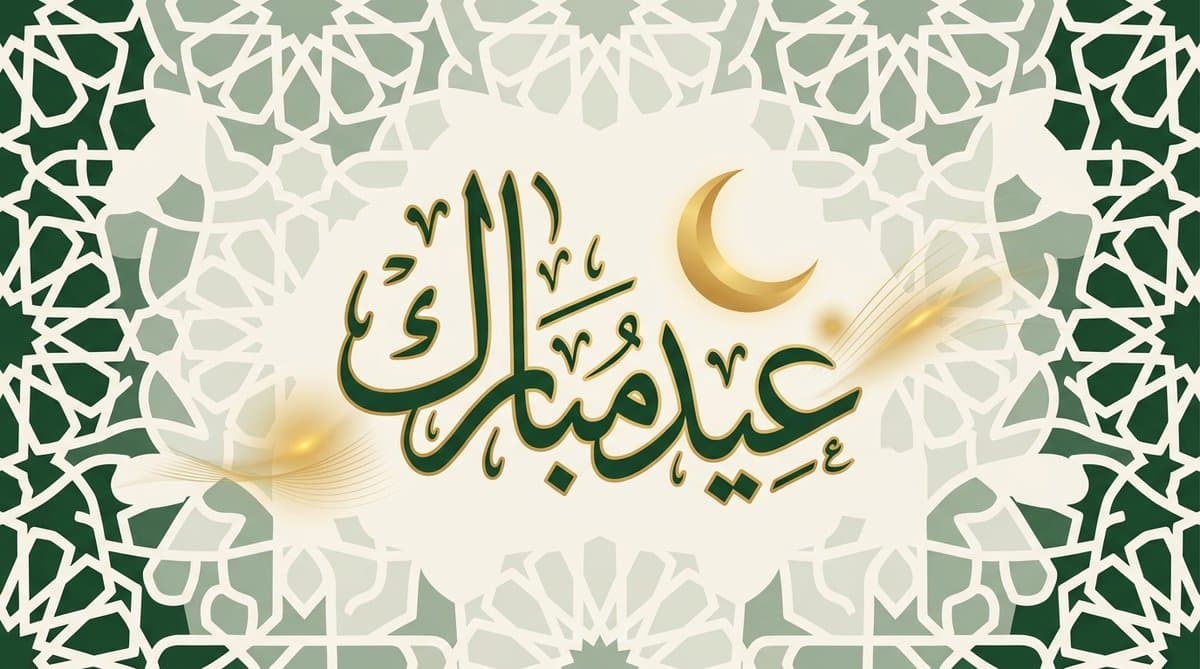
As the crescent moon of Shawwal is sighted, nearly two billion Muslims across the globe transition from the solemn introspection of Ramadan to the joyous celebration of Eid al-Fitr. Today, expected to be Friday, March 20, 2026, homes and mosques will echo with the beautiful phrase, « Eid Mubarak. » But what is the true Eid Mubarak meaning? This greeting, while simple to say, carries profound layers of spiritual significance, cultural heritage, and heartfelt prayer. It is far more than a simple « Happy Holiday »; it is a powerful invocation of blessings that encapsulates the very essence of this sacred festival.
The Linguistic and Spiritual Roots of ‘Eid Mubarak’
To fully grasp the Eid Mubarak meaning, we must look at its Arabic origins. The phrase is composed of two powerful words: ‘Eid’ (عيد) and ‘Mubarak’ (مبارك). Each word has a deep etymological and spiritual resonance within the Islamic tradition. The word ‘Eid’ comes from the Arabic root ‘a-w-d’ (عَادَ), which means « to return » or « to recur. » This signifies a festival or celebration that comes back year after year, a recurring day of immense joy and communal gathering. In Islam, there are two major Eids: Eid al-Fitr, the « festival of breaking the fast, » and Eid al-Adha, the « festival of the sacrifice. » Both are times of spiritual renewal and gratitude that punctuate the Islamic year.
The second word, ‘Mubarak,’ is derived from the root ‘b-r-k’ (بَرَكَ), which is the foundation for the concept of *barakah*, or divine blessing. *Barakah* refers to an abundance of goodness, grace, and prosperity that flows directly from Allah. When something is described as ‘Mubarak,’ it means it is endowed with this divine blessing. Therefore, when you say « Eid Mubarak » to someone, you are not merely wishing them a happy day. You are making a heartfelt supplication (dua), asking Allah to bestow His blessings upon their celebration, their family, and their life. You are praying that their festival is filled with divine grace, goodness, and lasting joy.
This concept of seeking and sharing blessings is central to the Muslim worldview. Allah reminds us in the Quran of the importance of gratitude as a means of increasing our blessings: « And [remember] when your Lord proclaimed, ‘If you are grateful, I will surely increase you [in favor]’… » (Surah Ibrahim, verse 7). The celebration of Eid, established after the Prophet Muhammad’s ﷺ migration (Hijrah) from Mecca to Medina, is a direct expression of this gratitude. It is a day to thank Allah for providing the strength and guidance to complete the spiritual discipline of Ramadan. The greeting « Eid Mubarak » becomes a verbal manifestation of this collective thankfulness, spreading a prayer for blessings throughout the community.
Celebrating Eid al-Fitr: The Context Behind the Greeting
The phrase « Eid Mubarak » gains its fullest meaning when understood within the context of the Eid al-Fitr celebration itself. This festival is a culmination of a month of intense devotion, fasting, and self-reflection during Ramadan. It is, as its name suggests, the « festival of breaking the fast. » After abstaining from food and drink from dawn until sunset for a month, this day marks a return to a normal routine, but with a renewed spirit and a purified heart. The joy of Eid is not just about the permission to eat and drink during the day again; it is a profound spiritual joy, a celebration of a major spiritual accomplishment.
Several key rituals precede and define the day of Eid, each adding depth to the celebratory atmosphere. The first is Zakat al-Fitr, an obligatory charitable donation that must be paid *before* the Eid prayer. This small amount, given on behalf of every member of the household, is intended to purify those who fasted from any shortcomings during Ramadan and, crucially, to ensure that the poorest members of the community have the means to celebrate Eid without worry. It is a powerful act of social solidarity that cleanses the giver and uplifts the receiver. Before the Eid prayer, it is essential to fulfill this duty. You can determine the precise amount for your family using our helpful Zakat al-Fitr calculator.
The day of Eid begins early with a special congregational prayer, the Salat al-Eid. Muslims adorn themselves in new or their best clothes, symbolizing a fresh start, and gather in mosques or large open areas. The air is filled with the sound of the Takbirat—the chanting of « Allahu Akbar, Allahu Akbar, La ilaha illa Allah, wallahu Akbar, Allahu Akbar, wa lillahil Hamd » (Allah is the Greatest… and to Allah belongs all praise). This collective prayer and praise create a powerful sense of unity and shared faith. To ensure you don’t miss this important gathering, you can find the exact timings for your location by checking the prayer times on Al Muslim Plus. Following the prayer, families and friends embark on a day of feasting, visiting one another, and exchanging gifts, particularly ‘Eidiya’ (monetary gifts) for children, spreading happiness and strengthening social bonds.
How and When to Share Eid Greetings
Knowing how to properly share Eid greetings is a wonderful way to participate in the celebration and show respect for the Muslim community. The greeting « Eid Mubarak » is appropriate to use throughout the day of Eid al-Fitr, which in some cultures is celebrated for up to three days. It is the most universally recognized and understood Eid greeting across the diverse Muslim world, from the Middle East to Southeast Asia and the West.
When someone wishes you « Eid Mubarak, » a warm and appropriate response is « Khair Mubarak, » which means you wish goodness and blessings back upon them. Alternatively, you can simply smile and reply with « Eid Mubarak » in return. Another beautiful and traditional greeting, often used by those with deeper knowledge of the Sunnah, is « Taqabbal Allahu minna wa minkum, » which means « May Allah accept [the worship] from us and from you. » This is a profound supplication that acknowledges the efforts of Ramadan and prays for their acceptance by God. This greeting is a beautiful form of supplication, and you can find many more authentic supplications (duas) for various occasions in our collection.
While « Eid Mubarak » is universal, many cultures have their own unique expressions. In Turkey, you might hear « Bayramınız mübarek olsun » (May your festival be blessed). In Indonesia and Malaysia, « Selamat Hari Raya » (Happy Celebration Day) is common. For non-Muslims wishing to extend greetings to their Muslim friends, neighbors, or colleagues, saying « Eid Mubarak » is highly encouraged and deeply appreciated. It is a simple gesture of goodwill and solidarity that builds bridges and fosters mutual respect. There is no complex etiquette to worry about; a sincere smile and the simple phrase « Eid Mubarak » are all that is needed to share in the joy of the day.
The Message of Eid in a Modern Context
In our interconnected yet often fractured world, the message of Eid al-Fitr holds particular resonance. As reported by sources like ABC7 Chicago, recent celebrations have occurred under the cloud of global conflicts and rising anti-Muslim sentiment in various parts of the world. In this context, the greeting « Eid Mubarak » transcends a personal wish and becomes a collective prayer for peace, unity, and blessed relief for the entire global Muslim community (*Ummah*) and for humanity at large.
Eid is a powerful antidote to division. It is a day for forgiveness and mending broken relationships. The spirit of the day encourages individuals to let go of grudges, seek reconciliation, and strengthen the bonds of family and community. The shared experience of the Eid prayer, where people from all walks of life stand shoulder-to-shoulder, is a potent symbol of equality and brotherhood. This spirit of unity is a vital message in times of turmoil, reminding us of our shared humanity.
Furthermore, the celebration itself is tied to a celestial rhythm. As noted by the Dispatch, the Islamic calendar is a lunar calendar, which means the date of Eid shifts back by about 11 days each year relative to the Gregorian calendar. This celestial timing connects Muslims to a natural, cosmic cycle, reminding them of a tradition that transcends modern schedules. The celebration of Eid moves through all four seasons over time, a beautiful reminder of the constancy of faith amidst the changing seasons of life. You can easily track this and other important Islamic dates using our convenient Hijri calendar converter. Ultimately, « Eid Mubarak » is a call to carry the renewed spirit of Ramadan—patience, empathy, charity, and God-consciousness—into the rest of the year, spreading its blessings far and wide.
Frequently Asked Questions
What is the literal meaning of Eid Mubarak?
Eid Mubarak literally translates to « Blessed Festival » or « Blessed Celebration. » ‘Eid’ means festival or feast, and ‘Mubarak’ means blessed. It is a supplication, asking God to bestow blessings upon the person’s celebration.
How do you respond when someone says Eid Mubarak?
A common and warm response is « Khair Mubarak, » which wishes goodness and blessings back. You can also simply reply with « Eid Mubarak » or say « Taqabbal Allahu minna wa minkum » (May Allah accept from us and from you).
Is it okay for a non-Muslim to say Eid Mubarak?
Yes, absolutely. It is a very welcome and appreciated gesture of respect and goodwill. Muslims are happy to hear this greeting from their friends, neighbors, and colleagues of all faiths.
Are there other greetings besides Eid Mubarak?
Yes, while Eid Mubarak is the most universal, other greetings exist. « Taqabbal Allahu minna wa minkum » is a traditional Islamic supplication. Culturally, you might hear « Selamat Hari Raya » in Malaysia/Indonesia or « Bayramınız mübarek olsun » in Turkey.
Do Muslims fast on the day of Eid?
No, it is actually forbidden (haram) to fast on the day of Eid al-Fitr. The day is meant for celebration and breaking the month-long fast of Ramadan, signifying gratitude and joy.
What is the difference between Eid al-Fitr and Eid al-Adha?
Eid al-Fitr is the « festival of breaking the fast » and marks the end of Ramadan. Eid al-Adha is the « festival of the sacrifice » and occurs about two months later, coinciding with the completion of the Hajj pilgrimage.
Why does the date of Eid change every year?
Eid follows the Islamic Hijri calendar, which is a lunar calendar based on the cycles of the moon. Since a lunar year is about 11 days shorter than the solar Gregorian year, Islamic holidays like Eid shift back by approximately 11 days each year.
What is Zakat al-Fitr, which is associated with Eid?
Zakat al-Fitr is a mandatory charitable donation that Muslims must pay before the Eid al-Fitr prayer. It serves to purify the fast of any shortcomings and to ensure that the poorest members of the community can also celebrate Eid.
Ultimately, the Eid Mubarak meaning is a reflection of the spirit of Islam itself: a spirit of gratitude, community, blessing, and peace. It is a simple phrase with a profound impact, connecting hearts and spreading joy across continents and cultures. As we share this blessed greeting, let us remember its deeper call to action: to embody the lessons of Ramadan, to foster unity, to practice forgiveness, and to be a source of blessings for all those around us.