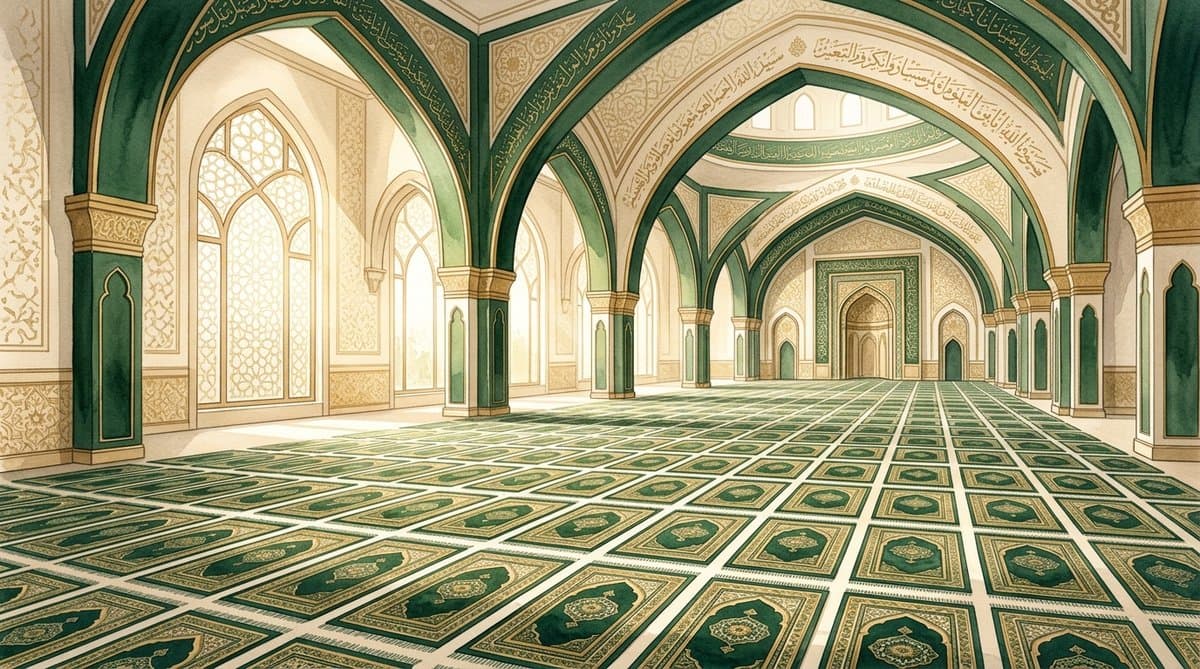
Eid Mubarak! As the blessed month of Ramadan draws to a close, Muslims around the world welcome the joyous occasion of Eid al-Fitr. This day of celebration, gratitude, and community is crowned by a special act of worship: the Eid al-Fitr prayer. This communal prayer is a beautiful expression of thankfulness to Allah for the strength and opportunity to fast and worship throughout the month. This year, on Friday, March 20, 2026, this blessed day coincides with the master of all days, Jumu’ah, adding a unique spiritual dimension that we will explore in this comprehensive guide.
The Spiritual Significance of Eid al-Fitr Prayer
Eid al-Fitr, the “Festival of Breaking the Fast,” is one of the two major holidays in Islam. It is a divine gift from Allah, a day to celebrate the spiritual purification achieved during Ramadan. The prayer itself is the central event of the day, a moment when the entire community, young and old, men and women, gather in a display of unity and faith. It is a powerful reminder of the brotherhood and sisterhood that binds the Ummah (global Muslim community). Allah mentions this spirit of completion and gratitude in the Quran: « He wants you to complete the prescribed period and to glorify Allah for having guided you, so that you may be grateful. » (Surah Al-Baqarah, verse 185).
The Eid prayer is more than just a ritual; it is a manifestation of collective joy and spiritual success. After a month of discipline, self-restraint, and intense devotion, believers come together in open spaces or large mosques to offer their thanks. The Prophet Muhammad ﷺ established this practice and encouraged all members of the community to attend, including women and children, to share in the blessings and joy of the day. This act of gathering reinforces social bonds, allows for forgiveness and reconciliation, and presents a powerful image of a united community celebrating its faith.
From Jakarta, where authorities have prepared 76 locations for the prayer as reported by Voi.id, to Dakar, where the Omarienne community gathers at the Grand Mosque, and Rabat, where King Mohammed VI will perform the prayer at the Ahl Fès Mosque, the scene is the same: millions of Muslims standing shoulder to shoulder, glorifying Allah. This global synchronicity is a testament to the prayer’s role in uniting hearts. It is a time to forget worldly differences and focus on the shared identity as servants of Allah, grateful for His mercy and guidance.
Preparing for the Eid Prayer: Following the Sunnah
The preparation for the Eid prayer begins before one even leaves the house. Following the Sunnah (the practices of the Prophet Muhammad ﷺ) on this day earns us rewards and helps us fully immerse ourselves in the spirit of Eid. These simple yet profound acts beautify the day and set a tone of reverence and celebration.
Ghusl, Adornment, and Perfume
It is a highly recommended Sunnah to perform Ghusl (a full ritual bath) on the morning of Eid before heading to the prayer. This act symbolizes purification, both physical and spiritual. Following the bath, we are encouraged to wear our best clothes. This does not mean they must be new, but rather the best and cleanest one possesses, as a sign of respect for the blessed day. For men, applying a pleasant, non-alcoholic perfume (attar) is also a beautiful part of this Sunnah.
Eating Before the Prayer
A unique Sunnah of Eid al-Fitr is to eat something before leaving for the prayer. This act clearly marks the end of the month of fasting. The Prophet Muhammad ﷺ would not leave for the Eid al-Fitr prayer until he had eaten some dates, and he would eat an odd number of them. (Narrated by Al-Bukhari). This simple act is a declaration that the fast is over and the day of celebration has begun.
Reciting the Takbirat al-Eid
The air on Eid morning should be filled with the sound of the Takbir. This glorification of Allah begins from the sunset of the last day of Ramadan and continues until the Imam starts the Eid prayer. The words are a powerful declaration of faith: « Allāhu akbar, Allāhu akbar, Allāhu akbar, lā ilāha ill-Allāh, Allāhu akbar, Allāhu akbar, wa lillāhi’l-ḥamd » (Allah is the greatest, Allah is the greatest, Allah is the greatest, there is no god but Allah, Allah is the greatest, Allah is the greatest, and to Allah belongs all praise). Reciting this on the way to the prayer location, whether in a car or walking, fills the heart and the surroundings with the remembrance of Allah.
Paying Zakat al-Fitr
One of the most critical obligations connected to this day is the payment of Zakat al-Fitr. This charitable donation is obligatory on every Muslim who has the means, and it must be paid *before* the Eid prayer. Its purpose is twofold: to purify the one who fasted from any idle talk or indecent speech committed during Ramadan, and to provide food for the needy so they too can celebrate Eid. The Prophet ﷺ enjoined it as a means to ensure everyone in the community has a festive meal on this day. To ensure you pay the correct amount for your family, you can use the Al Muslim Plus Zakat al-Fitr calculator, which provides the rate based on your country.
How to Perform the Eid al-Fitr Prayer: A Step-by-Step Guide
The Eid prayer is distinct from the five daily prayers in its format. It consists of two Rak’ahs (units of prayer) and includes a number of extra Takbirs (saying « Allahu Akbar »). It is performed in a congregation without an Adhan (call to prayer) or an Iqamah (second call to prayer). The prayer is typically held in a large open area, called a Musalla, or in a large mosque to accommodate the crowds. The time for the Eid prayer begins shortly after sunrise, and you can check the precise timing for your location using a reliable tool like the Al Muslim Plus prayer times calculator.
The most widely accepted method involves seven Takbirs in the first Rak’ah and five in the second. Here is a clear breakdown of the steps to help you perform the prayer with confidence and peace of mind.
Detailed Prayer Breakdown
Below is a table detailing each step of the two Rak’ahs of the Eid prayer. Remember to maintain focus and Khushu’ (humble concentration) throughout, reflecting on the blessings of Allah and the culmination of your Ramadan worship.
| Step | First Rak’ah (Unit) | Second Rak’ah (Unit) |
|---|---|---|
| 1. Niyyah (Intention) | Make the intention in your heart to perform the two-Rak’ah Eid al-Fitr prayer with the Imam. | Rise from prostration for the second unit, saying « Allahu Akbar ». |
| 2. Takbirat al-Ihram | Follow the Imam, raising your hands to your ears and saying « Allahu Akbar » to begin the prayer. | – |
| 3. Opening Supplication | Quietly recite the opening supplication (Dua al-Istiftah), such as « Subhanakallahumma wa bihamdika… » | – |
| 4. Extra Takbirs | The Imam will say « Allahu Akbar » seven additional times. Raise your hands with each Takbir and then return them to your sides or chest. It is recommended to praise Allah quietly between Takbirs. | The Imam will say « Allahu Akbar » five additional times. Follow the Imam in the same manner as the first Rak’ah. |
| 5. Quran Recitation | After the final Takbir, the Imam will recite Surah Al-Fatiha aloud, followed by another Surah. It is Sunnah to recite Surah Al-A’la (Chapter 87). Listen attentively. | The Imam will recite Surah Al-Fatiha aloud, followed by another Surah. It is Sunnah to recite Surah Al-Ghashiyah (Chapter 88). Listen attentively. |
| 6. Ruku’ & Sujood | Perform the Ruku’ (bowing) and two Sujood (prostrations) as you would in any regular prayer, following the Imam. | Perform the Ruku’ and two Sujood as you would in any regular prayer, following the Imam. |
| 7. Tashahhud & Salam | – | After the second prostration, sit for the Tashahhud, send blessings upon the Prophet ﷺ (Salawat Ibrahimiyyah), make dua, and then conclude the prayer by turning your head to the right and left, saying « Assalamu Alaikum wa Rahmatullah ». |
The Eid Khutbah (Sermon): An Integral Part of the Day
Unlike the Friday prayer where the sermon (Khutbah) precedes the prayer, the Eid sermon is delivered *after* the two Rak’ahs are completed. While some scholars consider listening to the sermon to be a highly recommended Sunnah and not strictly obligatory, it is a significant part of the Eid observance. Leaving immediately after the prayer means missing out on immense benefit, blessings, and important community reminders.
The Prophet ﷺ always delivered a sermon after the Eid prayer. It is an opportunity for the Imam to congratulate the community, remind them of Allah’s blessings, and encourage them to continue the good habits cultivated during Ramadan. The sermon often touches upon themes of unity, charity, forgiveness, and the importance of upholding Islamic values throughout the year. It’s a moment of collective spiritual nourishment that reinforces the lessons of the past month.
Attending the sermon also allows for the exchange of greetings with fellow Muslims. After the Imam concludes, the beautiful tradition of embracing one another and saying « Eid Mubarak » (Blessed Eid) or « Taqabbal Allahu Minna wa Minkum » (May Allah accept from us and from you) takes place. This strengthens the bonds of community and spreads the joy of the day. If you are looking for a place to pray, whether at home or traveling, the Al Muslim Plus Mosque Finder can help you locate nearby mosques and Eid prayer grounds.
A Special Blessing: When Eid Falls on a Friday
This year, 2026, Eid al-Fitr falls on a Friday, merging two of the most blessed days in the Islamic week and year. This special occurrence brings with it a specific ruling (fiqh) regarding the Jumu’ah (Friday) prayer. The prophetic tradition provides guidance on this matter. It is reported that the Prophet Muhammad ﷺ said: « Two Eids have been combined on this day of yours. So whoever wishes, it [the Eid prayer] is sufficient for him for the Jumu’ah prayer. But we are going to hold the Jumu’ah prayer. » (Narrated by Abu Dawud).
Based on this and other narrations, the majority of scholars hold the view that if a person attends the Eid prayer on a Friday, the obligation to attend the Jumu’ah prayer is lifted for them. They have the option to pray Dhuhr (the regular noon prayer) at home instead. This is considered a concession (rukhsah) from Allah to ease the burden on the community, especially for those who live far from the mosque and have already traveled once for the Eid prayer.
However, several points are crucial to understand. First, this concession applies only to those who actually attended the Eid prayer. For anyone who missed it, Jumu’ah remains obligatory. Second, it is still required for the Imam of the local mosque to establish and lead the Jumu’ah prayer for those who wish to attend. Third, and most importantly, it is considered more virtuous and rewarding to attend both prayers if one is able to do so without undue hardship. Attending both the Eid prayer and the Jumu’ah prayer allows a believer to gain the blessings of both sacred gatherings. On such a doubly blessed day, it is highly recommended to increase one’s acts of worship, such as making dhikr (remembrance of Allah). You can keep track of your praises with a digital tool like the Tasbeeh counter to easily glorify Allah throughout the day.
Frequently Asked Questions
What is the ruling on the Eid al-Fitr prayer?
The Eid al-Fitr prayer is considered Sunnah Mu’akkadah, which means it is a highly emphasized and confirmed Sunnah of the Prophet Muhammad ﷺ. While not obligatory (fard) like the five daily prayers, it is strongly discouraged to miss it without a valid excuse.
Are women supposed to attend the Eid prayer?
Yes, it is highly recommended for women to attend the Eid prayer. The Prophet Muhammad ﷺ instructed all women, including those who were menstruating (who would stay apart from the prayer area but partake in the supplication and atmosphere), to come out and witness the blessings of the day.
What should I do if I miss the congregational Eid prayer?
If you miss the Eid prayer with the congregation, you can make it up at home. You should pray two Rak’ahs following the same method with the extra Takbirs, but there will be no sermon (Khutbah) for a prayer performed individually.
What is the time for the Eid prayer?
The time for the Eid prayer begins approximately 15-20 minutes after sunrise and lasts until the time of Dhuhr prayer begins. However, it is best practice to perform it in the early morning, as was the Sunnah.
Do I have to pay Zakat al-Fitr before the Eid prayer?
Yes, it is an obligation to pay Zakat al-Fitr before the Eid prayer is performed. Paying it after the prayer is considered regular charity (sadaqah) and does not fulfill the specific obligation of Zakat al-Fitr.
What are the Takbirat al-Eid and when should they be recited?
The Takbirat al-Eid is the specific praise recited on Eid day: « Allāhu akbar, Allāhu akbar, lā ilāha ill-Allāh, Allāhu akbar, Allāhu akbar, wa lillāhi’l-ḥamd. » For Eid al-Fitr, it is recited from the night of Eid (after the moon is sighted) until the Imam begins the Eid prayer.
If Eid is on a Friday, do I still have to pray Jumu’ah?
If you attend the Eid prayer on a Friday, you have the concession to miss the Jumu’ah prayer and pray Dhuhr instead. However, it is more virtuous and rewarding to attend both prayers if you are able to do so.
The Eid al-Fitr prayer is a profound and joyous culmination of a month of devotion. It is a symbol of our gratitude, unity, and spiritual renewal. By understanding its significance, preparing for it according to the Sunnah, and performing it with sincerity, we fully embrace the gift of this blessed day. As you celebrate with family and friends, remember to fill your day with remembrance of Allah and make heartfelt prayers for yourself, your loved ones, and the entire Ummah. You can find a beautiful selection of authentic supplications in the Al Muslim Plus collection of Duas. May Allah accept your fasting, your prayers, and all your good deeds. Eid Mubarak!