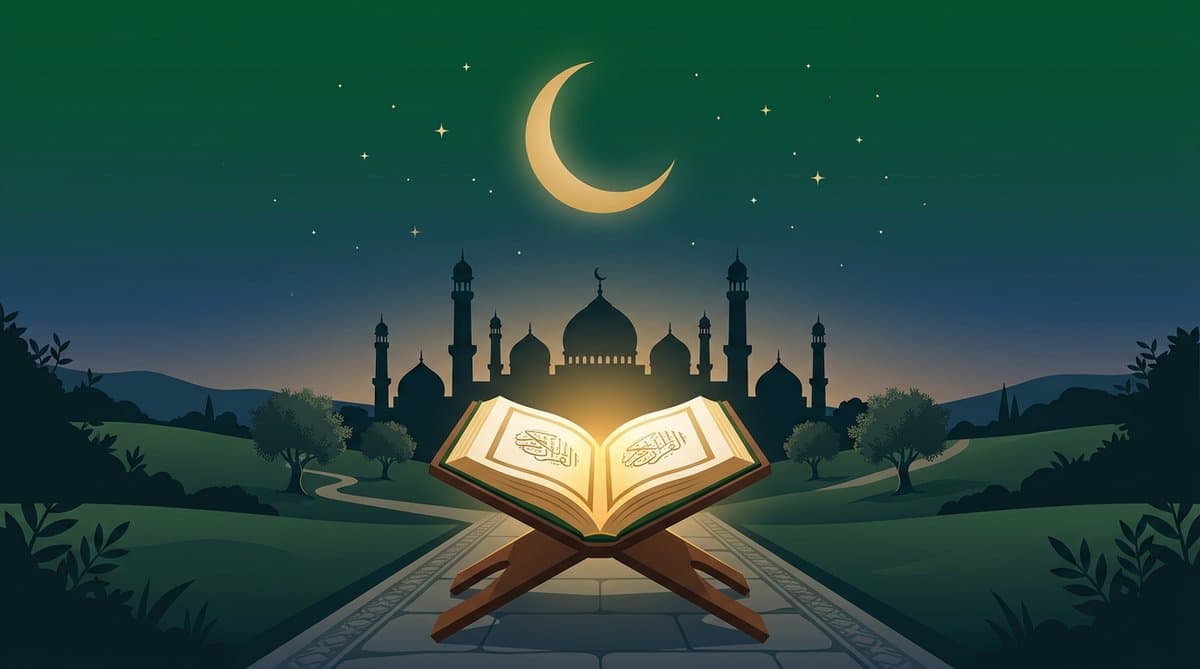
As the crescent moon signals the arrival of the ninth month in the Islamic calendar, Muslims around the globe welcome Ramadan 2026. This sacred period, which is anticipated to begin around February 27, 2026, is far more than a time of abstaining from food and drink; it is a profound journey of spiritual renewal, reflection, and reconnection with Allah. This guide is designed to accompany you through the blessed days and nights of Ramadan 2026, exploring its spiritual essence, key practices, and the unparalleled opportunity of Laylatul Qadr.
The Spiritual Essence of Fasting in Islam
Ramadan is one of the five pillars of Islam, a mandatory act of worship for all able-bodied adult Muslims. At its core, the practice of fasting (*Sawm*) is a divine command from Allah, as stated in the Quran: “O you who have believed, decreed upon you is fasting as it was decreed upon those before you that you may become righteous” (Surah Al-Baqarah, verse 183). The ultimate goal of this physical act is a deep spiritual outcome: *Taqwa*, or God-consciousness. It is the state of being constantly aware of Allah’s presence and striving to please Him in all our actions. Fasting cultivates this awareness by detaching us from our worldly desires and reminding us of our dependence on our Creator.
The discipline of fasting extends beyond the physical. It is a training ground for the soul, teaching patience, self-control, and empathy. When we voluntarily experience hunger and thirst, we gain a deeper appreciation for the blessings we often take for granted and develop a more profound compassion for those who live with scarcity daily. This heightened sense of empathy is meant to translate into action, inspiring greater charity (*Sadaqah*) and kindness towards others. The Prophet Muhammad ﷺ said, “Whoever does not give up false speech and evil actions, Allah has no need of his leaving his food and drink” (Narrated by Al-Bukhari). This hadith underscores that the true fast is one of the entire body—the tongue from gossip, the eyes from unlawful sights, and the heart from ill intentions.
Furthermore, Ramadan is intrinsically linked to the Quran. It is the month in which the first verses were revealed to the Prophet Muhammad ﷺ, a guidance for humanity. Therefore, this month is a celebration of the Quran, and Muslims are encouraged to increase their engagement with the holy book through recitation, study, and reflection. The nights of Ramadan are filled with special congregational prayers, *Taraweeh*, where long portions of the Quran are recited. This immersion in divine words purifies the heart, illuminates the mind, and provides a spiritual roadmap for the year ahead. It is a time to reset our spiritual compass and align our lives more closely with the teachings of Islam.
Navigating Ramadan 2026: Key Dates and Daily Practices
Ramadan 1447 AH, corresponding to Ramadan 2026, is expected to commence on or around Friday, February 27, 2026, and conclude on Sunday, March 29, 2026. These dates are based on astronomical calculations, but the official start of the month is traditionally confirmed by the physical sighting of the new crescent moon. This beautiful tradition connects Muslims to the natural rhythms of the universe and unites the community in a shared spiritual experience. The month culminates in the joyous celebration of Eid al-Fitr, the festival of breaking the fast, which will likely fall on Monday, March 30, 2026.
The daily rhythm of Ramadan is structured around fasting from dawn until sunset. The day begins with a pre-dawn meal, *Suhoor*, which provides the energy needed for the day’s fast. The Prophet ﷺ encouraged this meal, saying, “Take Suhoor as there is a blessing in it” (Narrated by Al-Bukhari and Muslim). After Suhoor, the Fajr prayer marks the beginning of the fast. Throughout the day, Muslims abstain from all food, drink, and marital relations. The fast is broken at sunset with a meal called *Iftar*, traditionally started with dates and water, following the practice of the Prophet ﷺ. This moment is a special time for supplication, as the Prophet ﷺ informed us that the prayer of a fasting person at the time of breaking the fast is not rejected.
Prayer is the backbone of this blessed month. Beyond the five obligatory daily prayers, the nights of Ramadan are beautified with the voluntary *Taraweeh* prayers. These prayers, performed in congregation after the Isha prayer, are a hallmark of the Ramadan experience, fostering a sense of community and shared devotion. Maintaining this rigorous schedule of worship requires careful planning, especially in balancing spiritual duties with work and family life. To ensure you never miss the call to prayer or the crucial times for Suhoor and Iftar, using a tool that provides accurate prayer times for your city can be incredibly helpful. The Al Muslim Plus app offers precise timings and adhan notifications, allowing you to focus on your worship without worry.
The Spiritual Apex: Seeking Laylatul Qadr, the Night of Decree
The final ten nights of Ramadan hold a special status, as they contain a night more precious than any other: *Laylatul Qadr*, the Night of Decree. Allah dedicates an entire chapter of the Quran to its honor, stating: “The Night of Decree is better than a thousand months” (Surah Al-Qadr, verse 3). This single verse reveals its immense value; the worship performed on this one night carries more reward than the worship of over 83 years, a lifetime for most people. It is the night when the Quran was sent down from the Preserved Tablet to the lowest heaven, marking the beginning of its revelation to mankind. As a reflection in Kashmir Reader aptly puts it, this is a night filled with mercy, ‘a night where sincere tears are never returned unanswered.’ It is on this night that angels descend to Earth, bringing peace and blessings until the dawn, and the divine decree for the coming year is determined.
The exact date of Laylatul Qadr is one of Allah’s secrets. The Prophet Muhammad ﷺ guided us to seek it in the odd-numbered nights of the last ten days of Ramadan (the 21st, 23rd, 25th, 27th, or 29th night). The wisdom behind its concealment is a mercy in itself. It encourages believers to exert themselves in worship throughout all ten nights, rather than focusing their efforts on a single, specific date. As Ustaz Khalid Basalamah explained in a recent discussion reported by tvOnenews, the prophetic approach was not to guess the date but to commit fully to worship for the entire duration. The Prophet ﷺ would ‘tighten his waistband’—a metaphor for increased effort and devotion—and spend these nights in prayer, recitation, and remembrance of Allah, encouraging his family to do the same.
To make the most of these blessed nights, one should focus on several key acts of worship. Foremost among them is *Qiyamulail* (standing in night prayer), whether it be Taraweeh or Tahajjud. Sincere and heartfelt supplication (*Dua*) is paramount. Aisha (may Allah be pleased with her) asked the Prophet ﷺ what she should say if she knew which night was Laylatul Qadr. He ﷺ taught her the beautiful supplication: *Allahumma innaka ‘afuwwun tuhibbul-‘afwa fa’fu ‘anni* (O Allah, You are Pardoning, You love to pardon, so pardon me). Reciting and reflecting upon the Quran, giving charity, and engaging in *Dhikr* (remembrance of Allah) are also powerful ways to seek the blessings of this night. Many Muslims also practice *I’tikaf*, secluding themselves in a mosque for the final ten days to dedicate their time entirely to worship, free from worldly distractions.
Practical Steps for a Spiritually Fulfilling Ramadan
Even with Ramadan 2026 already underway, it is never too late to set or renew your intentions (*niyyah*) for what you hope to achieve. A successful Ramadan begins with a clear purpose. Take a few moments for self-reflection. What spiritual habits do you want to build? Do you aim to complete a full recitation of the Quran, improve your prayer with greater concentration (*khushu’*), or perhaps establish a consistent habit of giving charity? Writing down these goals can help solidify your commitment. Remember that the Prophet ﷺ said, “Actions are but by intentions, and every man shall have that which he intended” (Narrated by Al-Bukhari and Muslim). A sincere intention is the foundation upon which all acts of worship are built and accepted.
Balancing your physical needs with your spiritual aspirations is key to a sustainable and fruitful Ramadan. Pay close attention to your diet during Suhoor and Iftar. Opt for complex carbohydrates, protein, and fiber at Suhoor to ensure slow-release energy throughout the day. At Iftar, break your fast gently with dates and water before moving to a balanced meal, avoiding overeating which can lead to lethargy and hinder your ability to perform night prayers. Hydration is crucial; drink plenty of water between Iftar and Suhoor. Equally important is managing your time effectively. Create a realistic daily schedule that allocates specific times for prayer, Quran reading, work, and rest. Minimize distractions like excessive social media or entertainment, and instead, fill those moments with beneficial acts like listening to Islamic lectures or using the Dhikr counter on the Al Muslim Plus app to increase your remembrance of Allah.
Ramadan is also a deeply communal and familial experience. Involve your entire family in the spirit of the month. Create a festive and spiritual atmosphere at home. Pray together, read Quran as a family, and prepare Iftar together. For children, make the month exciting and educational. Teach them about the significance of fasting in an age-appropriate manner, encourage them to perform small acts of charity, and share stories of the prophets and the companions. This not only strengthens family bonds but also instills a love for Islam in the hearts of the next generation. Extend this spirit to your community by sharing food with neighbors, contributing to local mosque initiatives, and checking in on the elderly or those in need. This collective worship and shared compassion are what make Ramadan a truly transformative experience for the entire Muslim Ummah.
Ramadan 2026 is a divine gift, an annual opportunity to purify our souls, seek forgiveness for our shortcomings, and draw closer to our Creator. By embracing its daily practices with sincerity and striving with devotion during its final ten nights, we can unlock immense spiritual rewards and emerge from the month with renewed faith and a strengthened connection to Allah. Let us seize this precious time, making every moment count in our pursuit of piety and divine pleasure.