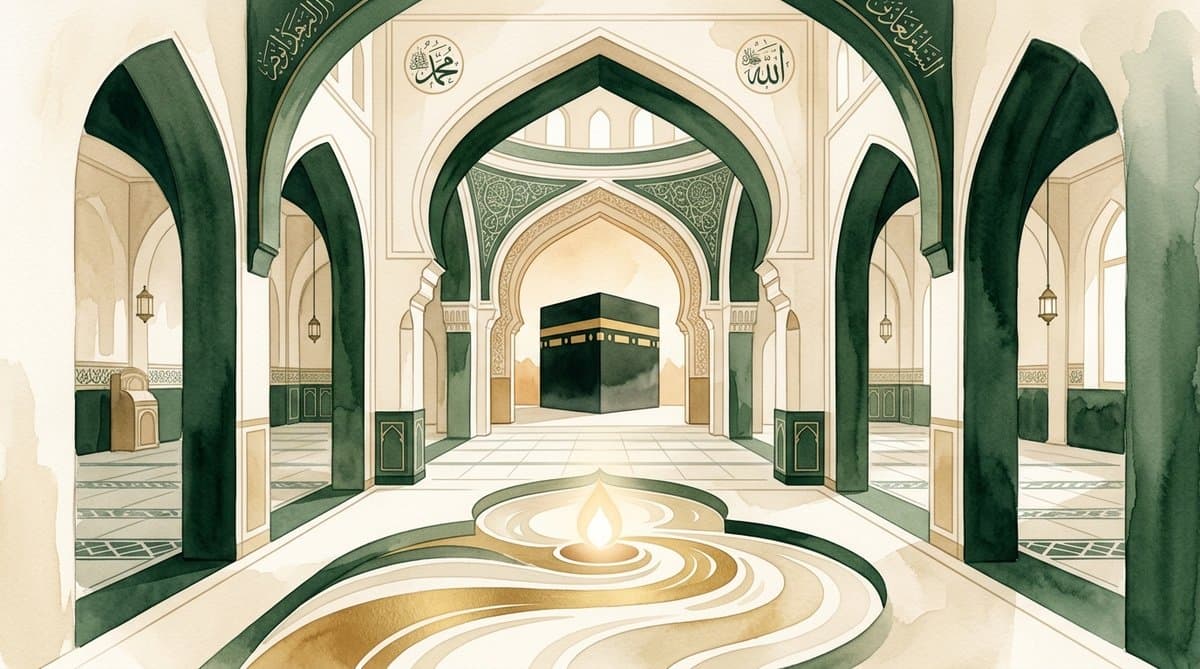
Salah, the ritual prayer, is the second pillar of Islam and the most profound connection a Muslim has with Allah. It is a direct conversation, a moment of peace, and a spiritual reset performed five times a day. For new Muslims, or those seeking to deepen their faith, learning the prayer step-by-step is a foundational journey. This guide will not only walk you through the mechanics of each movement and recitation but also explore the inner dimensions of prayer, helping you transform it from a routine into a truly soul-nourishing experience.
Before You Begin: The Foundations of a Valid Prayer
Before you stand for prayer, there are essential prerequisites that ensure its validity and prepare your heart and body for this sacred act of worship. These are not mere formalities; they are the keys that unlock the door to a meaningful conversation with your Creator. Neglecting them is like trying to make a call with a disconnected phone—the connection simply won’t be established. These steps center your mind, purify your body, and align your intention, setting the stage for a focused and accepted prayer.
Wudu (Ablution): The Key to Purification
The Prophet Muhammad ﷺ said, « Prayer is not accepted without purification. » (Narrated by Muslim). Wudu, or ablution, is the ritual washing that cleanses the body and soul. It involves washing the hands, mouth, nose, face, arms, head, and feet in a specific sequence. Each drop of water not only removes physical impurities but is also believed to wash away minor sins, leaving you feeling refreshed and spiritually prepared. It is a beautiful act of worship in itself, a physical manifestation of your readiness to stand before Allah, clean and humble.
Niyyah (Intention): The Heart of the Matter
The most critical element of any act of worship is the Niyyah, or intention. The Prophet Muhammad ﷺ famously stated, « Verily, actions are but by intentions, and for every person is what he intended. » (Narrated by Al-Bukhari and Muslim). Your intention is not something you need to say out loud; it is a firm resolution in your heart. Before you begin, you must know which of the five daily prayers you are about to perform (Fajr, Dhuhr, Asr, Maghrib, or Isha) and that you are performing it for the sake of Allah alone. This silent, internal commitment is what distinguishes prayer as an act of worship from mere physical exercise.
Facing the Qibla: Aligning with the Ummah
Muslims all over the world face a single, unified direction during prayer: the Kaaba in Mecca. This direction is called the Qibla. Facing the Qibla symbolizes the unity of the Muslim Ummah (community), all turning to one center in their worship of the One God. It fosters a sense of belonging and shared purpose, reminding us that we are part of a global family of believers. For Muslims traveling or in a new place, finding the correct direction can be a challenge. Using a reliable Qibla compass ensures you are always correctly oriented for your prayers, connecting you with millions of others at that very moment.
The Raka’ah: A Detailed Step-by-Step Breakdown
A Raka’ah is a single unit of Islamic prayer, consisting of a sequence of prescribed movements and recitations. Each daily prayer is composed of a specific number of these units. Mastering the components of one Raka’ah is the key to performing all prayers correctly. Below is a comprehensive, step-by-step guide to a single Raka’ah. Many new Muslims or those reconnecting with their faith often search for a ‘prière étape par étape’ or ‘prayer step-by-step’ guide, and this breakdown is designed to provide that clarity. We will cover the position, the action, and the essential recitations with their English transliteration and meaning.
From Standing to Prostration: The Cycle of Worship
The physical movements of Salah are profound acts of submission. From the upright standing position of Qiyam to the complete prostration of Sujud where the forehead touches the ground, each posture is symbolic. It is a journey from standing in conversation with Allah, to bowing in respect, to placing oneself in the lowest, most humble position before Him. This physical humility is a direct reflection of the inner state of the heart. The following table breaks down each step within one Raka’ah to help you perfect your form and recitation.
| Position (Arabic) | Action | What to Recite (Transliteration & Meaning) |
|---|---|---|
| Takbir al-Ihram | Stand, raise hands to ear level, and say « Allahu Akbar » (Allah is the Greatest). This marks the official start of the prayer. | Allahu Akbar (Allah is the Greatest) |
| Qiyam | Lower your hands and place your right hand over your left on your chest. Focus your gaze on the place of prostration. | Surah Al-Fatiha (recited in every Raka’ah), followed by another Surah or a few verses from the Quran. |
| Ruku’ | Say « Allahu Akbar » and bow down, keeping your back straight and parallel to the ground. Place your hands on your knees. | Subhaana Rabbiyal ‘Adheem (x3) (Glory be to my Lord, the Magnificent) |
| I’tidal | Rise from bowing back to a standing position, raising your hands. | Sami’ Allahu liman hamidah (Allah hears those who praise Him) Rabbanaa wa lakal-hamd (Our Lord, and to You belongs all praise) |
| Sujud | Say « Allahu Akbar » and go down into prostration. Your forehead, nose, palms of both hands, both knees, and the toes of both feet should touch the ground. | Subhaana Rabbiyal ‘A’laa (x3) (Glory be to my Lord, the Most High) |
| Jalsa | Say « Allahu Akbar » and rise to a sitting position. Sit on your left foot with your right foot upright. Place your hands on your knees. | Rabbighfir lee (x2) (O my Lord, forgive me) |
| Second Sujud | Say « Allahu Akbar » and perform a second prostration identical to the first. | Subhaana Rabbiyal ‘A’laa (x3) (Glory be to my Lord, the Most High) |
Assembling the Prayers: From Two to Four Raka’at
Once you understand the cycle of a single Raka’ah, you can easily assemble the five daily prayers. The number of Raka’at varies for each prayer, as does the point at which you recite the Tashahhud (the testimony of faith while sitting). Building a consistent habit of performing all five prayers on time is crucial, especially when trying to maintain the spiritual momentum gained during Ramadan. It’s a discipline that strengthens your faith day by day. To help you stay on track, a digital prayer tracker can be an invaluable tool, allowing you to monitor your daily prayers and build motivating streaks of consistency.
Two-Raka’ah Prayer (Fajr)
The Fajr prayer consists of two Raka’at. You will perform the complete step-by-step cycle of a Raka’ah twice. After the second prostration of the second Raka’ah, you will sit for the final Tashahhud. In this sitting position, you recite the full Tashahhud, followed by the Salawat (prayers upon Prophet Ibrahim) and then conclude the prayer by turning your head to the right and then to the left, saying « As-salamu alaykum wa rahmatullah » (Peace and mercy of Allah be upon you) each time.
Three-Raka’ah Prayer (Maghrib)
The Maghrib prayer has three Raka’at. You perform the first two Raka’at as described above. After the second prostration of the second Raka’ah, you sit and recite only the first part of the Tashahhud. Then, you say « Allahu Akbar » and stand up for the third Raka’ah. In this final Raka’ah, you only recite Surah Al-Fatiha. After the second prostration of this third Raka’ah, you sit for the final Tashahhud, recite it in full with the Salawat, and then give the Tasleem to conclude.
Four-Raka’ah Prayers (Dhuhr, Asr, Isha)
These prayers consist of four Raka’at. The first two are performed just like in the Maghrib prayer, including sitting for the first Tashahhud after the second Raka’ah. You then stand up for the third Raka’ah, reciting only Al-Fatiha. You complete the third Raka’ah, stand up for the fourth, and again recite only Al-Fatiha. After the final prostration of the fourth Raka’ah, you sit for the final Tashahhud, recite it completely with the Salawat, and finish the prayer with the Tasleem.
Cultivating Khushu: Moving Beyond Mechanical Motions
Salah is more than a sequence of movements; it is the nourishment for the soul. The ultimate goal is to achieve *Khushu*—a state of full submission, tranquility, and concentration before Allah. This is the difference between a prayer that is merely performed and one that is truly felt and established. Khushu turns prayer from a duty into a delight, a moment you look forward to. It requires conscious effort to train the heart and mind to be present with Allah.
Understanding What You Recite
How can you have a meaningful conversation if you don’t understand the words being spoken? One of the most powerful ways to increase Khushu is to learn the meaning of what you recite, especially Surah Al-Fatiha and the short surahs you use frequently. When you comprehend the praise, the supplication, and the declarations of faith, your heart engages along with your tongue. Deeper focus comes from this understanding. Take time to explore the translations and tafsir of the verses you recite, starting with the complete Quran available on Al Muslim Plus, which offers multiple translations to aid your comprehension.
Minimizing Distractions
Prepare your environment and your mind for prayer. Choose a clean, quiet spot free from noise and foot traffic. Put your phone on silent and out of sight. Before starting, take a few deep breaths and consciously leave the worries of the world behind you. During the prayer, keep your gaze fixed on the spot of prostration. This simple physical act helps to rein in a wandering mind and maintain focus on the task at hand.
The Power of Du’a Within Salah
Salah contains beautiful, built-in moments for personal supplication (du’a). The Prophet Muhammad ﷺ taught us that « the closest a servant is to his Lord is when he is in prostration (sujud), so increase supplication in it. » (Narrated by Muslim). Use this precious time to speak to Allah from your heart, in any language, about your hopes, fears, and needs. This personalizes the prayer and strengthens your individual connection with Him. You can find inspiration from a vast collection of supplications (duas) for every need to incorporate into your prostrations and make your prayers even more powerful.
Common Mistakes in Salah and How to Avoid Them
Perfecting the prayer is a lifelong journey, and making mistakes is a part of learning. However, some common errors can diminish the reward of the prayer or even invalidate it. Being aware of these pitfalls is the first step toward correcting them and ensuring your worship is performed in the best possible manner, as taught by the Prophet Muhammad ﷺ.
Rushing Through Positions (The ‘Pecking Rooster’)
One of the most frequent mistakes is rushing through the movements without pausing in each position. The Prophet ﷺ saw a man praying hastily and told him to repeat his prayer, teaching him the importance of *Tuma’ninah*—achieving a state of stillness and calm in each posture before moving to the next. When you bow, be still in Ruku’ long enough to say the tasbeeh properly. When you stand up, stand completely straight before going into prostration. This deliberate pace allows for mindfulness and reverence.
Incorrect Recitation of Al-Fatiha
The recitation of Surah Al-Fatiha is a pillar (*rukn*) of the prayer, and its omission or major mispronunciation can invalidate a Raka’ah. It is essential for every Muslim to invest time in learning to recite Al-Fatiha correctly. This may involve listening to qualified reciters, seeking help from a knowledgeable person in your community, or using apps that provide audio recitations. The effort spent in perfecting the recitation of Allah’s words is a highly rewarded act of worship.
A Wandering Mind and Lack of Focus
Everyone struggles with a wandering mind during prayer. Shaytan (Satan) works hard to distract us with thoughts of work, family, and worldly matters. When you find your mind drifting, gently bring it back by focusing on the meaning of the words you are reciting. Seeking refuge in Allah from Shaytan before you begin can also help. Remember that the struggle for focus is itself a rewarded act of jihad (struggle) against your own self and external whispers.
Incorrect Sujud (Prostration) Posture
The Prophet Muhammad ﷺ instructed us to prostrate on seven bones: the forehead (including the nose), both hands, both knees, and the tips of the toes of both feet. Common mistakes include lifting the feet off the ground, not having the nose touch the floor along with the forehead, or tucking the arms in a way that the elbows touch the ground (which is discouraged for men). Ensuring all seven points are firmly on the ground is key to a correct and humble prostration.
Frequently Asked Questions
What if I forget a step or make a mistake in my prayer?
For minor mistakes, like forgetting a recitation, you can perform ‘Sujud as-Sahw’ (Prostration of Forgetfulness). This involves two extra prostrations before concluding the prayer with Tasleem. For major errors, like missing a whole Raka’ah, you must complete the missing part and then perform Sujud as-Sahw.
Can I pray in a language other than Arabic?
The core recitations of the prayer, such as Surah Al-Fatiha and the Takbir, must be in Arabic as they are the words of the Quran. However, personal supplications (du’a), especially during prostration, can be made in any language you are comfortable with.
What are the things that invalidate a prayer?
Actions that invalidate Salah include talking, laughing, eating, drinking, turning away from the Qibla, or losing one’s wudu (ablution). If any of these occur, you must stop, renew your wudu if necessary, and start the prayer again from the beginning.
How do I make up for missed prayers (Qada)?
According to the majority of scholars, missed obligatory (Fard) prayers must be made up. You should pray them as soon as you remember. The intention should be for the specific prayer you missed (e.g., the Dhuhr prayer from yesterday).
What is the difference between Fard, Sunnah, and Nafl prayers?
Fard prayers are the five daily obligatory prayers, and missing them is a sin. Sunnah prayers are those that the Prophet ﷺ regularly performed in addition to the Fard prayers; they are highly recommended. Nafl prayers are voluntary prayers that one can offer at any permissible time to gain extra reward.
Is it better to pray alone or in congregation?
Praying in congregation (Jama’ah) is highly encouraged, especially for men at the mosque. The reward for praying in congregation is multiplied many times over compared to praying alone. It also fosters community spirit and unity.
How do I know the correct prayer times for my location?
Prayer times are based on the position of the sun and vary by location and time of year. The most reliable way to know the correct times is by using a trusted Islamic app or website that provides accurate prayer times based on your specific city or geolocation.
What should I do if I am unsure about the Qibla direction?
If you are unsure of the Qibla, you should try your best to determine it (e.g., by using a compass, an app, or asking a local Muslim). If no means are available, make your best educated guess and pray in that direction. Your prayer will be considered valid, insha’Allah (God willing).
Mastering the steps of Salah is a beautiful and rewarding journey that deepens your relationship with Allah. It begins with learning the physical form but blossoms into a spiritual practice that brings tranquility and purpose to your entire day. Remember that perfection is not the goal, but sincere and continuous effort is. Each prayer is an opportunity to improve, to connect more deeply, and to draw closer to your Creator. May Allah accept all our prayers and guide us on the straight path.