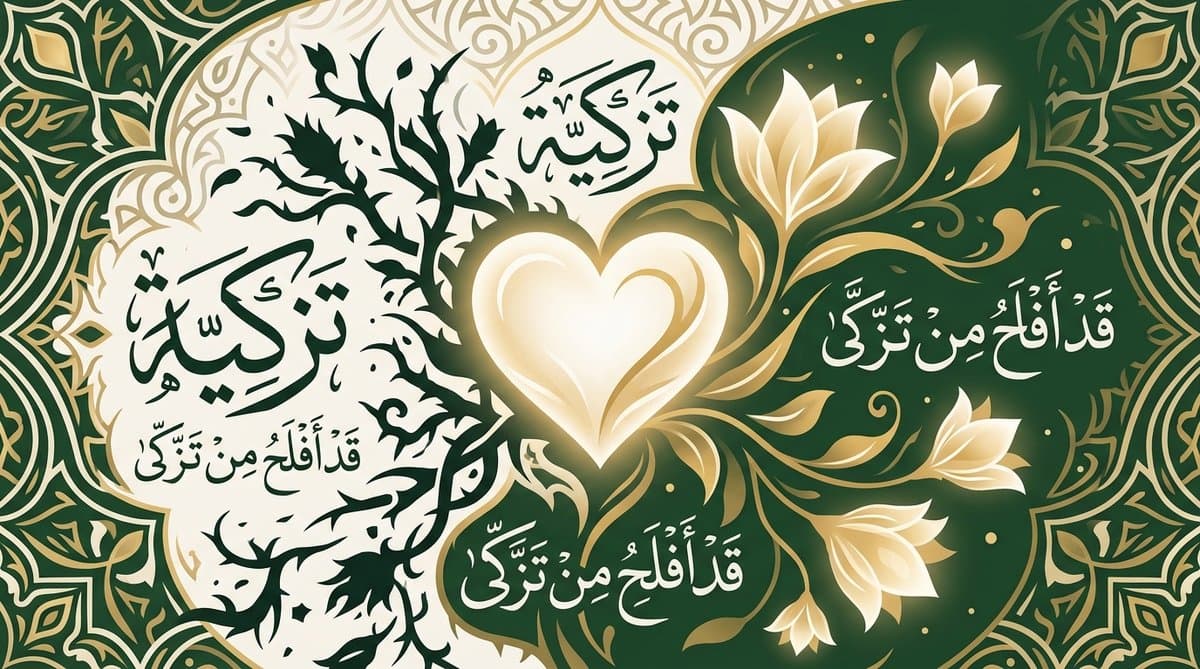
In Islam, the concept of purity extends far beyond physical cleanliness. While ablution (wudu) prepares the body for prayer, a deeper, more profound process is required for the soul. This is known as *Tazkiyat al-Nafs*, or the spiritual purification of the self. It is the lifelong journey of cleansing the heart from spiritual ailments and nurturing it with virtues, a path that leads to inner peace, contentment, and ultimate closeness to Allah. As Allah states in the Quran, “He has certainly succeeded who purifies himself” (Surah Al-A’la, verse 14). This article serves as a practical guide to understanding and embarking on this essential spiritual journey.
What is Spiritual Purification (Tazkiyah) in Islam?
The Arabic term *Tazkiyah* holds a rich, dual meaning: to purify and to cause to grow. It is not merely about removing negativity but also about cultivating positivity, much like a gardener who removes weeds (purification) to allow beautiful flowers to flourish (growth). In the Islamic context, spiritual purification is the process of cleansing the soul from its blameworthy traits—such as arrogance, envy, greed, and anger—and adorning it with praiseworthy qualities like humility, gratitude, patience, and sincere love for Allah.
This inner purification is distinct from the physical purification known as *taharah*. While *taharah* (like *wudu* and *ghusl*) is a necessary condition for acts of worship like prayer, *Tazkiyah* is the very essence and goal of that worship. One can be physically clean but spiritually stained. The Prophet Muhammad ﷺ emphasized this inner state, teaching that Allah “does not look at your forms or your wealth, but He looks at your hearts and your deeds” (Narrated by Muslim). Therefore, the focus of a Muslim’s life should be the state of their heart, the seat of intention and faith.
The importance of *Tazkiyah* is woven throughout the Quran. It was a core component of the mission of all prophets. Prophet Ibrahim (peace be upon him) prayed for a messenger to be sent to his descendants who would, “recite to them Your verses and teach them the Book and wisdom and purify them” (Surah Al-Baqarah, verse 129). This prayer was answered in the form of Prophet Muhammad ﷺ, whose role was not only to deliver the message but also to guide his followers in this transformative process of inner purification. It is the path to true success (*falah*) in this life and the Hereafter.
The Inner Struggle: Recognizing Diseases of the Heart
The first step toward any cure is a correct diagnosis. Before we can purify the soul, we must first recognize the spiritual diseases that corrupt it. The heart, in the Islamic tradition, is a spiritual organ that can become sick, and if left untreated, can die. This inner battle against the ego and its negative inclinations is known as the greater *jihad*—the *jihad al-nafs* (struggle against the self). It requires constant vigilance, self-awareness, and a sincere desire to change for the sake of Allah.
These spiritual diseases are numerous, but some are particularly destructive and act as gateways to other sins. Identifying them within ourselves is a crucial and humbling exercise in self-honesty. They are the internal obstacles that prevent us from drawing closer to our Creator and finding peace. By learning to spot their symptoms in our thoughts, feelings, and actions, we can begin the targeted process of treatment and purification.
Understanding these ailments is not about inducing despair, but about empowering ourselves with knowledge. Just as a doctor studies illnesses to prescribe remedies, a Muslim studies the diseases of the heart to apply the cures found in the Quran and the Sunnah. It is a hopeful process, rooted in the knowledge that Allah is a healer and that sincere effort is always rewarded.
Kibr (Arrogance and Pride)
Arrogance was the first sin ever committed, the very reason for Iblis’s downfall when he refused to bow to Adam (peace be upon him), saying, “I am better than him” (Surah Al-A’raf, verse 12). *Kibr* is the disease of seeing oneself as superior to others and rejecting the truth because it comes from someone you deem ‘lesser’. It manifests in subtle ways: dismissing advice, belittling others, loving praise, and feeling entitled. The Prophet Muhammad ﷺ warned sternly against it, saying, “No one who has an atom’s weight of arrogance in his heart will enter Paradise” (Narrated by Muslim). The cure for arrogance lies in cultivating humility (*tawadu’*) by constantly reminding oneself of one’s own humble origins and complete dependence on Allah.
Hasad (Envy)
Envy is the malicious feeling of wanting a blessing to be removed from another person. It is a poison that consumes the heart and destroys good deeds. The Prophet ﷺ described its corrosive effect vividly: “Beware of envy, for envy consumes good deeds just as fire consumes wood” (Narrated by Abu Dawud). An envious person is never at peace, as they are constantly distressed by the blessings Allah bestows upon others. The remedy for envy is to practice gratitude (*shukr*) for one’s own blessings, to make *dua* (supplication) for the person one envies, and to understand that Allah’s wisdom in distributing His favors is perfect. Exploring the beautiful 99 Names of Allah, such as Al-Wahhab (The Giver of All), can help one appreciate His divine plan.
Riya’ (Showing Off)
*Riya’* is the act of performing deeds of worship to gain the praise and admiration of people rather than seeking the pleasure of Allah. It is a form of hidden *shirk* (associating partners with Allah) because it directs an act meant for God toward His creation. A person afflicted with *riya’* might pray longer when people are watching or give charity more publicly to be seen as generous. This disease nullifies the reward of the deed and corrupts the intention, which is the foundation of all actions in Islam. The cure is to constantly renew one’s intention (*niyyah*), to perform good deeds in secret whenever possible, and to reflect on the fact that only Allah’s acceptance matters.
Ghaflah (Heedlessness)
*Ghaflah* is a state of forgetfulness and negligence regarding Allah, our purpose in life, and the Hereafter. It is the spiritual slumber that allows other diseases to take root. A heedless heart is engrossed in worldly distractions, chasing temporary pleasures while forgetting its ultimate destination. The Quran repeatedly warns against this state: “And do not be like those who forgot Allah, so He made them forget themselves” (Surah Al-Hashr, verse 19). The primary cure for heedlessness is *dhikr* (the remembrance of Allah). Consistent remembrance awakens the heart, polishes it from the rust of sin, and keeps it connected to its Creator.
The Cure: A Practical Program for Tazkiyah
Once the diseases of the heart are identified, Islam provides a comprehensive program for their cure. Spiritual purification is not a passive wish but an active pursuit involving consistent effort and specific practices. This program is holistic, addressing our relationship with Allah, His words, His Messenger ﷺ, and our own inner self. It is a journey of small, consistent steps that, over time, lead to profound transformation. The key is to be patient with oneself, to remain steadfast, and to never despair of Allah’s mercy and help.
Strengthening Your Connection with Allah
The foundation of Tazkiyah is a strong and vibrant connection with the Divine. This is built and maintained through core acts of worship.
Salah (Prayer): The five daily prayers are the cornerstone of a Muslim’s life and the primary tool for spiritual cleansing. The Prophet ﷺ illustrated this beautifully when he asked his companions, “If there was a river at your door and you took a bath in it five times a day, would you have any filth left on you?” They said, “No filth would remain on him.” He then said, “That is the likeness of the five daily prayers, by which Allah erases sins” (Narrated by Al-Bukhari and Muslim). Consistently performing your five daily prayers is the foundation of spiritual purification. You can use a tool like the Al Muslim Plus Prayer Tracker to build this essential habit.
Dhikr (Remembrance): The constant remembrance of Allah is what keeps the heart alive and polished. The Prophet ﷺ said, “The likeness of the one who remembers his Lord and the one who does not remember Him is that of the living and the dead” (Narrated by Al-Bukhari). Engaging in frequent dhikr polishes the heart from the rust of sins. Our digital Tasbeeh counter can help you keep track of your remembrances throughout the day, whether it’s saying *SubhanAllah*, *Alhamdulillah*, or *Allahu Akbar*.
Dua (Supplication): Turning to Allah in supplication is a profound act of humility and worship. It is an acknowledgment of our weakness and His infinite power. Asking Him specifically for a pure heart is one of the most powerful things we can do. The Prophet ﷺ himself used to pray, “O Allah, grant my soul its piety and purify it, for You are the best to purify it.” Sincerely asking Allah for purification is a powerful tool. Explore our collection of authentic supplications (duas) for guidance, forgiveness, and a pure heart.
Engaging with Divine Guidance
The heart cannot find its way to purity without a map. That map is the guidance sent by Allah.
Reading and Reflecting on the Quran: The Quran is described by Allah as “a healing for that which is in the breasts” (Surah Yunus, verse 57). It is the ultimate spiritual medicine. However, its healing power is unlocked not just through ritual recitation, but through *tadabbur*—deep, thoughtful reflection on its meanings. When we read the Quran with an open heart, it realigns our priorities, corrects our worldview, and cleanses our spiritual ailments. The Quran is the ultimate guide to purifying the soul. You can read, listen to, and reflect on its verses with translations and tafsir on the complete Quran page in Al Muslim Plus.
Studying the Sunnah: The life and character of the Prophet Muhammad ﷺ are the practical embodiment of a purified soul. He is the perfect model of humility, patience, gratitude, and mercy. Studying his biography (*seerah*) and his teachings (*hadith*) provides a clear blueprint for our own character development. By striving to emulate his conduct, we walk a well-trodden path toward spiritual excellence.
Self-Accountability and Sincere Repentance
Purification requires active self-management and a mechanism for course correction.
Muhasabah (Self-Accountability): This is the practice of taking account of one’s own soul. Umar ibn al-Khattab famously said, “Take account of yourselves before you are taken to account.” This can be done daily, perhaps before sleeping, by reflecting on one’s actions. What did I do today solely for Allah’s sake? Where did my ego get in the way? In which moments was I heedless? This honest self-assessment is vital for identifying weaknesses and making a plan for improvement.
Tawbah (Repentance): We are human, and we will inevitably make mistakes. The door to purification is never closed, thanks to the immense mercy of Allah. Sincere repentance (*tawbah*) cleanses the stain of sin from the soul. The conditions for sincere repentance are: to feel deep regret for the sin, to stop committing it immediately, to have a firm resolve never to return to it, and, if the sin involved the rights of another person, to restore those rights. *Tawbah* is not a moment of shame but a moment of hope, a turning back to the Most Merciful.
The Rewards: Living with a Purified Soul
The journey of Tazkiyat al-Nafs, while requiring lifelong effort, yields immense rewards both in this world and the next. The purification of the soul is not merely an abstract spiritual exercise; it has a tangible and transformative impact on every aspect of a Muslim’s life. The inner peace and strength cultivated through this process become the foundation for a life of purpose, contentment, and meaningful relationships. It is the key to unlocking the best version of ourselves.
The fruits of Tazkiyah are not delayed until the afterlife; they begin to blossom here on earth. A purified heart experiences a quality of life that cannot be bought with worldly wealth or status. It is a state of being that is resilient in the face of hardship and grateful in times of ease. Ultimately, it is the preparation of the soul to meet its Lord in a state of which He is pleased.
This is the ultimate success that the Quran speaks of. It is the attainment of a tranquil soul (*nafs al-mutma’innah*), which will be called upon on the Day of Judgment with the most beautiful words: “O reassured soul, return to your Lord, well-pleased and pleasing [to Him], and enter among My [righteous] servants, and enter My Paradise” (Surah Al-Fajr, verses 27-30).
Inner Peace and Contentment (Sakina)
One of the most immediate fruits of spiritual purification is the attainment of *sakina*, a profound sense of tranquility and inner peace that descends from Allah. A heart cleansed of envy, greed, and worldly anxiety is a heart that is content with the decree of Allah. It finds rest in remembrance of Him, as the Quran states, “Unquestionably, by the remembrance of Allah hearts are assured” (Surah Ar-Ra’d, verse 28). This peace is not dependent on external circumstances; it is a stable, internal state that anchors the believer through life’s inevitable storms.
Improved Character and Relationships
*Tazkiyah* directly translates into improved *akhlaq* (character). As the soul is purified from arrogance, anger, and selfishness, it becomes adorned with humility, patience, and compassion. This inner transformation naturally leads to better relationships with family, friends, neighbors, and the wider community. A person with a pure heart is forgiving of others’ faults, gentle in their speech, and just in their dealings. They become a source of comfort and good for those around them, embodying the beautiful character of the Prophet Muhammad ﷺ.
Closeness to Allah (Qurb)
The ultimate goal and the sweetest fruit of spiritual purification is *qurb*, or closeness to Allah. As the veils of sin and heedlessness are lifted from the heart, it becomes more receptive to the light of divine guidance. The believer begins to feel a more intimate and personal relationship with their Creator. Their worship is no longer a mechanical ritual but a heartfelt conversation. This closeness is described in a Hadith Qudsi where Allah says, “…My servant draws not near to Me with anything more loved by Me than the religious duties I have enjoined upon him, and My servant continues to draw near to Me with supererogatory works so that I shall love him. When I love him I am his hearing with which he hears, his seeing with which he sees, his hand with which he strikes and his foot with which he walks…” (Narrated by Al-Bukhari).
Frequently Asked Questions
What is the difference between physical and spiritual purification in Islam?
Physical purification (taharah), like wudu and ghusl, involves cleaning the body with water to prepare for acts of worship. Spiritual purification (Tazkiyah) is the internal process of cleansing the heart from spiritual diseases like pride and envy, and cultivating virtues like humility and gratitude. Physical purity is a prerequisite for worship, while spiritual purity is its ultimate goal.
What is the Quranic basis for Tazkiyat al-Nafs?
The Quran frequently emphasizes spiritual purification. Key verses include, “He has certainly succeeded who purifies himself” (Surah Al-A’la, 14) and “He has succeeded who purifies it [the soul], and he has failed who instills it [with corruption]” (Surah Ash-Shams, 9-10). It was also a core part of the mission of Prophet Muhammad ﷺ (Surah Al-Baqarah, 129).
What are the biggest obstacles to spiritual purification?
The biggest obstacles are internal spiritual diseases and external distractions. Internally, arrogance (kibr), envy (hasad), showing off (riya’), and heedlessness (ghaflah) corrupt the heart. Externally, an excessive attachment to worldly life (dunya) and the whispers of Shaytan can divert a person from their spiritual goals.
How can I practice self-accountability (muhasabah)?
Muhasabah can be practiced daily by setting aside a few minutes, perhaps before sleep, to reflect on your day. Ask yourself what actions you did for Allah’s sake, where you fell short, and how you can improve tomorrow. This honest self-review helps identify patterns of behavior and fosters a conscious effort to change.
Is spiritual purification a one-time act or a lifelong process?
Spiritual purification is a continuous, lifelong journey, not a final destination. The human soul is constantly in a state of flux and faces daily tests and challenges. Therefore, the effort to purify the heart must be consistent through daily prayer, remembrance, repentance, and self-reflection until one meets Allah.
Can I achieve spiritual purification on my own?
While personal effort is essential, achieving spiritual purification requires seeking knowledge, righteous companionship, and above all, the help and guidance of Allah. We must constantly make dua for Allah to aid us in this struggle, as we are completely dependent on His mercy and support.
What is the role of dhikr in purifying the heart?
Dhikr (the remembrance of Allah) is a central tool for purification. The Prophet ﷺ compared it to polishing a rusty heart. Consistent dhikr keeps the heart connected to its Creator, protects it from heedlessness, brings tranquility, and helps erase the effects of minor sins, thus keeping the soul clean and spiritually alive.
How does fasting in Ramadan contribute to spiritual purification?
Fasting is a powerful workshop for Tazkiyah. By abstaining from physical needs, a person learns self-control (taqwa) and discipline over their desires. This strengthens their spiritual-self over their physical-self, fosters empathy for the poor, and encourages increased worship, all of which are central to purifying the soul.
The path of spiritual purification, or *Tazkiyat al-Nafs*, is the very heart of the Islamic way of life. It is the challenging yet deeply rewarding journey of transforming our inner world to align with the will of our Creator. By diagnosing the diseases of the heart, applying the cures prescribed in the Quran and Sunnah, and persevering with patience and prayer, we can hope to achieve a state of inner peace and closeness to Allah. This pursuit is the key to true success—a success that brings contentment in this life and the ultimate reward of Paradise in the next.