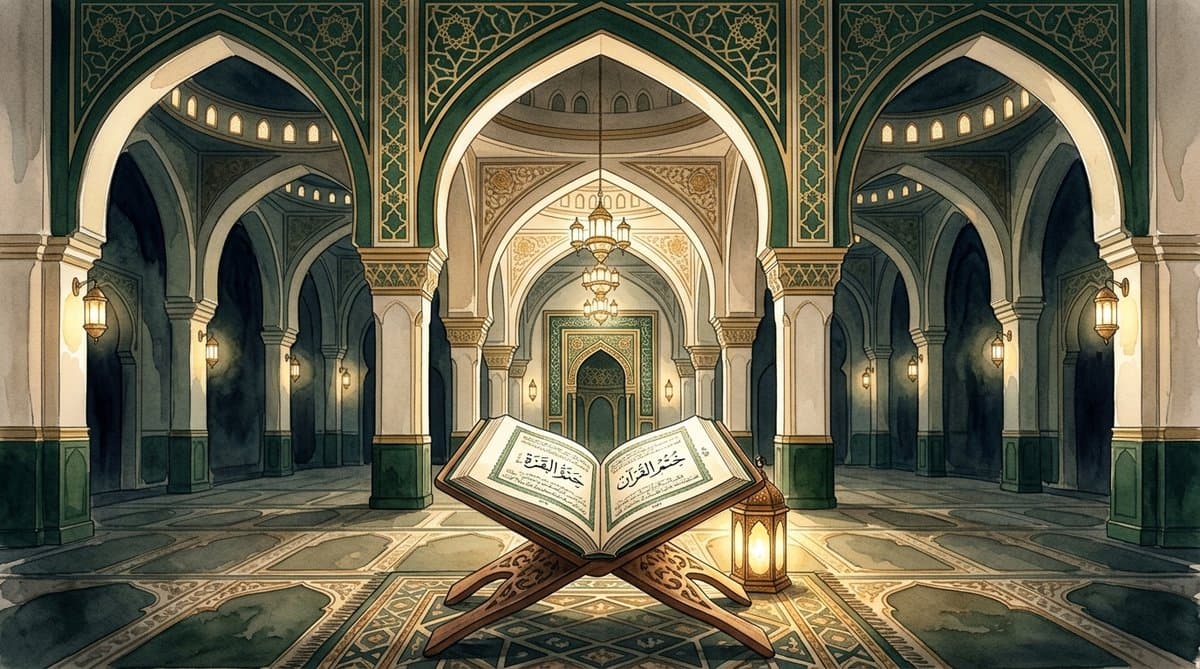
As the blessed month of Ramadan dawns, a unique spiritual energy fills the air, and at the heart of this sacred time are the Tarawih prayers. These special nightly prayers, performed after the Isha prayer, are a hallmark of Ramadan, drawing Muslims together in mosques and homes across the globe. More than just a ritual, Tarawih prayers are a profound act of worship that strengthens our individual connection with Allah and weaves the rich social fabric of the Muslim Ummah, from the smallest local congregations to massive, inspiring gatherings in public squares.
The Spiritual Roots and Significance of Tarawih
The term ‘Tarawih’ comes from the Arabic root word ‘raha’, which means to rest or relax. The prayer is named this way because the congregation traditionally takes a short rest after every four units (rak’ahs) of prayer. While not obligatory (fard), Tarawih is a highly recommended Sunnah Mu’akkadah—a confirmed practice of the Prophet Muhammad ﷺ and his Companions. The Prophet ﷺ led his companions in this prayer for a few nights in Ramadan but then discontinued praying it in congregation out of fear that it might become obligatory upon his followers. The practice was later revived during the caliphate of Umar ibn al-Khattab (may Allah be pleased with him), who gathered the people to pray behind a single imam.
The spiritual significance of Tarawih is immense. It is a time for deep reflection, recitation of the Quran, and seeking forgiveness. The Prophet Muhammad ﷺ said, « Whoever stands for prayer (at night) in Ramadan out of faith and in hope of reward, his previous sins will be forgiven. » (Narrated by Al-Bukhari and Muslim). This hadith underscores the incredible opportunity Ramadan presents for spiritual purification. The long standing, bowing, and prostrating, coupled with listening to the beautiful recitation of the Quran, helps to humble the heart and focus the mind solely on the worship of Allah. It’s a spiritual marathon that trains the soul in patience, discipline, and devotion, setting a pattern for the rest of the year.
Connection with the Quran
One of the most beautiful aspects of Tarawih prayers is the goal of completing the recitation of the entire Quran (khatm al-Quran) over the course of the month. Many mosques arrange for an imam who is a Hafiz (one who has memorized the entire Quran) to lead the prayers, reciting one Juz’ (part) each night. This allows the congregation to listen to the entire divine revelation in the very month it was revealed. This immersive experience connects believers to the words of Allah in a powerful way, allowing them to ponder the meanings and lessons of verses they may not read regularly. For those seeking to deepen their own study, exploring authentic hadith collections can provide context and further explanation for the Quranic verses recited.
The Number of Rak’ahs
A common point of discussion is the number of rak’ahs in Tarawih. Practices vary between 8, 20, or even more rak’ahs, followed by the Witr prayer. Both practices have basis in the actions of the early generations of Muslims. The Prophet ﷺ himself is reported to have prayed 8 rak’ahs of night prayer (Tahajjud) plus 3 Witr. The practice of 20 rak’ahs was established by Umar ibn al-Khattab and was the consensus of the Companions in his time. The key is not to become rigid or divisive over the number. The goal is the sincerity of the worship and the quality of the prayer. Whether one prays 8 or 20, the focus should be on performing them with devotion and khushu’ (humble concentration).
Weaving the Community Fabric: Tarawih at the Local Level
Beyond individual spirituality, Tarawih prayers are a powerful catalyst for community bonding. Mosques that are quiet for much of the year come alive during Ramadan nights. Families, neighbors, and friends gather, filling the prayer halls shoulder to shoulder, standing before Allah as equals. This act of praying in congregation dissolves social barriers and reinforces the Islamic principle of brotherhood and sisterhood.
The community-building power of Tarawih is beautifully illustrated by local initiatives around the world. For instance, as reported by Tribratanews Polres Purwakarta in Indonesia, a ‘Tarawih Keliling’ (roving Tarawih) program in Darangdan showcases this spirit. The event, held at Masjid Al-Firdaus on March 13, 2026, brought together community leaders, youth, and even local police officials to pray together. According to the Darangdan Police Chief, AKP Yoga Prayoga, S.H., the initiative was designed to « strengthen the relationship with the community » and collectively maintain peace and order during the holy month. This is a perfect example of how the shared act of worship can be a platform for dialogue, cooperation, and strengthening the local social fabric.
These local gatherings are the bedrock of the global Ummah. It is in these neighborhood mosques that children learn the beauty of congregational prayer, new converts find a welcoming community, and lifelong friendships are forged over shared plates of dates after the prayer. The sounds of ‘Ameen’ echoing in unison, the sight of rows perfectly aligned, and the shared feeling of peace create an unforgettable atmosphere of unity. Finding a local congregation is a key part of the Ramadan experience. Tools like a Mosque Finder can be invaluable for locating nearby places of worship, especially for those who are new to a city or traveling during the holy month.
A Global Ummah in Prayer: Tarawih on the World Stage
While Tarawih prayers strengthen local bonds, they also paint a magnificent picture of global Muslim unity. From the grand mosques of Makkah and Madinah, where millions gather, to humble prayer spaces in the farthest corners of the earth, Muslims stand in prayer facing one direction. This shared ritual connects a diverse, global community of over a billion people, transcending nationality, ethnicity, and language. No matter where a Muslim is in the world, the structure and spirit of Tarawih are instantly familiar, creating a sense of belonging to a single, worldwide family.
In recent years, this global unity has been displayed in stunning new ways. We have witnessed massive, open-air Tarawih prayers being organized in iconic public spaces in non-Muslim majority countries. Events like ‘Taraweeh in Times Square’ in New York or prayers in London’s Trafalgar Square bring thousands of Muslims together in the heart of major world cities. These gatherings are not just acts of worship; they are powerful statements of identity, community, and peaceful presence. They show the beauty of Islam to the wider public and allow young Muslims, in particular, to feel a sense of pride and connection to their faith on a grand scale. They demonstrate that the Ummah is vibrant, confident, and united in its core practices.
This global synchronization of worship is a testament to the universality of Islam’s message. A Muslim in Tokyo and another in Toronto will break their fast and stand for prayer at their local sunset, united by the same faith and the same rituals. The very act of facing a single direction for prayer, the Qibla, is the ultimate symbol of this unity. A reliable Qibla Compass is an essential tool for every Muslim, ensuring that no matter where they are on the planet, their heart and body are oriented towards the Kaaba in Makkah, joining the global congregation of believers.
Practical Guide to a Meaningful Tarawih
To make the most of the nightly Tarawih prayers, a little preparation and intention can go a long way. The experience is not just about physical endurance but about spiritual nourishment. Here are some practical tips to help you have a fulfilling Tarawih, whether you pray at the mosque or at home.
Prepare Your Mind and Body
Tarawih can be physically demanding, so it’s wise to prepare. Have a light and nutritious iftar; avoid overeating, which can lead to sluggishness and fatigue during prayer. Ensure you are well-hydrated. Mentally, set your intention (niyyah) that you are performing this prayer solely for the sake of Allah, seeking His reward and forgiveness. Arrive at the mosque a little early to pray your Sunnah prayers calmly and find a good spot, avoiding the rush.
Maintain Focus and Khushu’
Maintaining khushu’ (humble concentration) during a long prayer can be challenging. Try to understand the meaning of what is being recited. Even if you don’t know Arabic, you can reflect on the general message of the Quran as a book of guidance. Focus your gaze on the place of prostration and try to minimize distractions. Remind yourself that you are standing before the Lord of the Worlds, and this is a precious, limited-time opportunity in Ramadan.
Engage in Dhikr and Dua
The short breaks between the sets of rak’ahs are a perfect time for dhikr (remembrance of Allah) and personal dua (supplication). Instead of chatting or checking your phone, use this time to glorify Allah. You can recite SubhanAllah, Alhamdulillah, Allahu Akbar, or send blessings upon the Prophet ﷺ. A digital Tasbeeh Counter like the one in the Al Muslim Plus app can help you keep track of your dhikr without losing focus. Make sincere dua for yourself, your family, the community, and the entire Ummah.
Consistency is Key
Try to be consistent with your Tarawih prayers throughout the month. The spiritual benefits accumulate over time. If you cannot attend the mosque every night, make an effort to pray at home, either alone or with your family. Praying Tarawih at home can be a beautiful way to bring the spirit of Ramadan into your household and teach your children the importance of this special prayer. Remember, Allah loves the consistent good deeds, even if they are small.
Frequently Asked Questions
Are Tarawih prayers mandatory (fard) in Islam?
No, Tarawih prayers are not mandatory (fard). They are a highly recommended Sunnah (Sunnah Mu’akkadah), meaning it was a confirmed practice of the Prophet Muhammad ﷺ. Performing them carries immense reward, but there is no sin for missing them.
How many rak’ahs should be prayed for Tarawih?
There is a difference of scholarly opinion on the number of rak’ahs. The most common practices are 8 rak’ahs or 20 rak’ahs, both of which are followed by the Witr prayer. Both practices are considered valid, and the focus should be on the quality and sincerity of the prayer.
Can I pray Tarawih at home instead of the mosque?
Yes, you can absolutely pray Tarawih at home. While praying in congregation at the mosque has special rewards and community benefits, praying at home is also a valid and rewarded act of worship, especially for those who are unable to go to the mosque.
What is the best time to pray Tarawih?
The time for Tarawih prayer begins after the Isha prayer is completed and extends until the time for Fajr prayer begins. It is typically prayed immediately after Isha in congregation at the mosque.
Do I have to know a lot of the Quran to pray Tarawih?
No, you do not need to have memorized large portions of the Quran. You can pray with the surahs you know. If praying at home, you can even hold a mushaf (physical Quran) or use a device to read from while you pray.
Is there a specific dua to recite after Tarawih prayers?
There isn’t a single, specific dua that is required after Tarawih. This is a precious time when supplications are accepted, so you should make personal and heartfelt duas in your own language for whatever you need from Allah for this life and the hereafter.
What if I join the Tarawih prayer late?
If you join the congregation late, you should join the imam in whatever position he is in and continue with the group. After the imam completes the Tarawih and Witr, you can stand up and complete the rak’ahs that you missed on your own.
The nightly Tarawih prayers are a gift of Ramadan, a divine opportunity for spiritual renewal, forgiveness, and profound connection with Allah. They are also a powerful expression of Muslim unity, binding hearts together in local mosques and connecting the global Ummah in a shared rhythm of worship. As we stand shoulder to shoulder, we are reminded that we are part of something much larger than ourselves—a worldwide community of faith. Let us embrace this beautiful practice with sincerity and hope, allowing it to illuminate our nights and transform our souls.